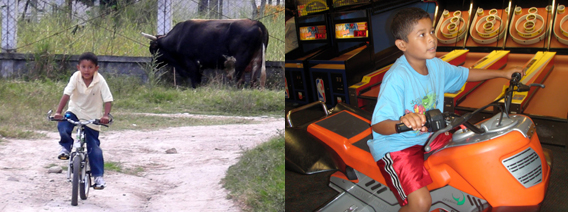
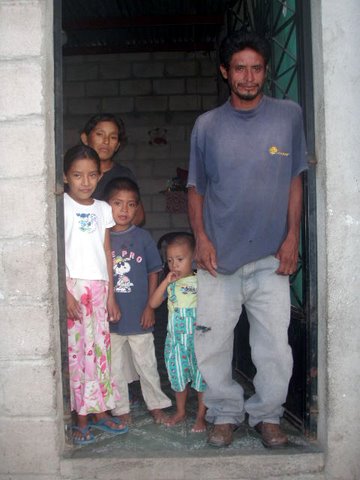
When I think about living in Honduras, one of the first things to come to mind is simplicity. Our home is small, on a tiny plot of land and the house is so uncluttered…no t.v., dishwasher, washing machine etc. We live amongst the geckos, roosters and a roaming bull.
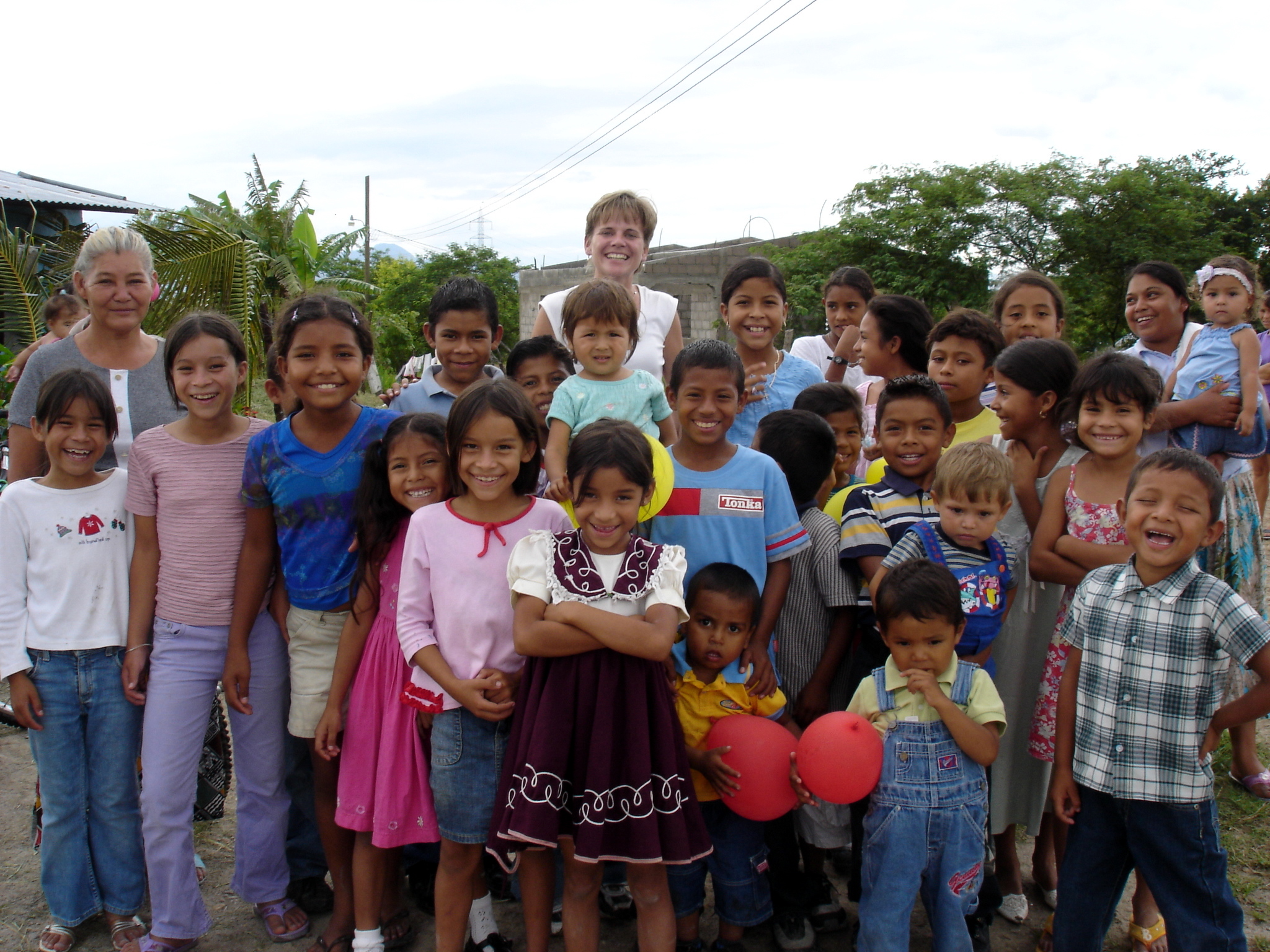
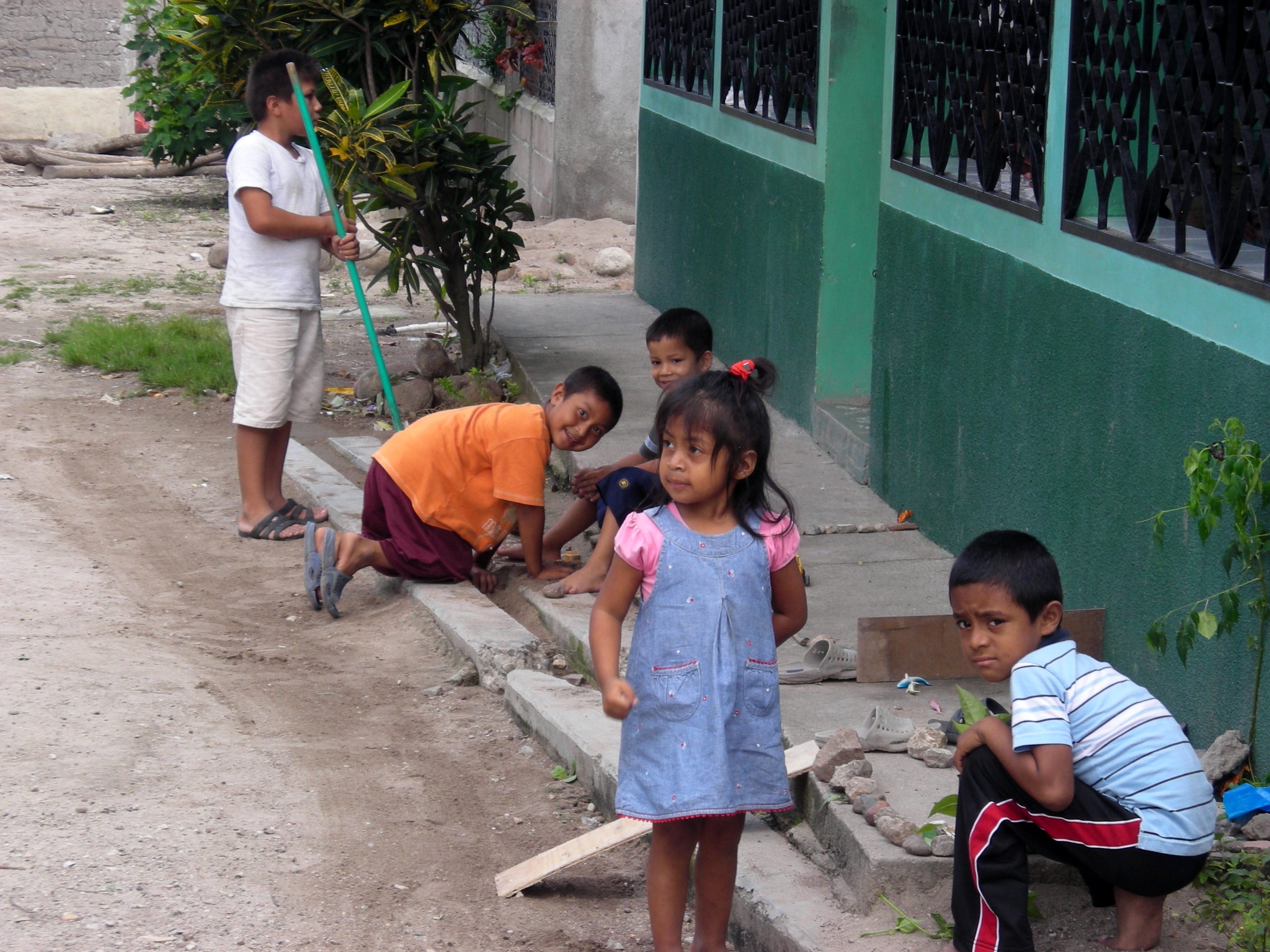
Our home is generally filled with children. I love to watch them play…they still rely on their imaginations to make up games…something many other children have lost. When they don’t have certain equipment for sports, they make up their own. Flip-flops are used for goalie gloves and sticks are used for baseball bats.
And it’s not just the children who show their creativity…I have seen adults use Coke bottles for three different things. One was used at a public hospital to collect used needles. A smaller version was used by an elderly asthmatic patient for an inhaler. Our friend Mita cut her’s lengthwise, and uses them for flower boxes.
Simple life….their homes, their lives, their wants, their needs.
How do they adapt to living in two different cultures? We have hosted a baby as young as 11 months, many school aged children, a 19 year old young woman and a middle aged man, while they have received medical treatment. They have stayed for as little as six weeks and as long as six months. We often wonder how they acclimate to life in the U.S., and how they re-adjust to life back home in Honduras.
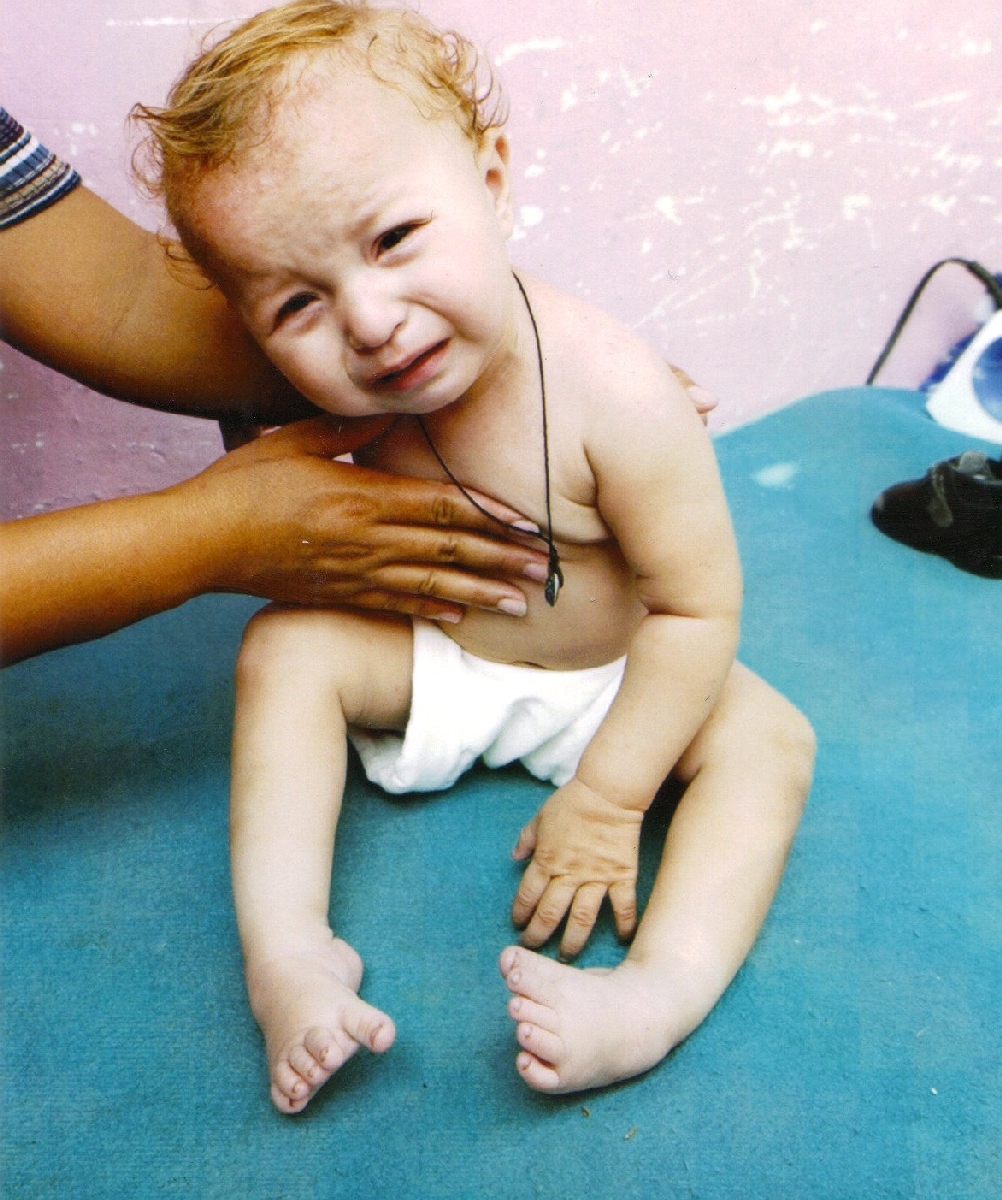
Recently we hosted 11 month old Berenice. She arrived to us with a serious heart defect. I cannot begin to imagine what her parents went through emotionally, handing her off to a nurse who would transport her to us…a family they had never met, living in a foreign country. People often question, “how could they let their child go?” My response is, “this is there only hope for keeping their child alive.”
Berenice arrived to us having been solely breast fed. Those first few days were quite challenging, offering her every type of formula and milk in all types of bottles and sippy cups. At last we discovered juice in a glass was what she’d tolerate…she loved the way her new teeth clanked on the glass! Soon we began introducing every type of food…so much for one new item at a time, this was full immersion.
Not only was food a new thing to become accostomed to, so was sleep. No longer was she snuggled in bed with others or perhaps sleeping in a hammock. She was now offered her own crib, in a room by herself. It became my husband’s nightly routine to sing her to sleep with a Willie Nelson tune.
Along with food and sleep, we all looked different, spoke in a different language and lived in a much different climate. It was amazing to see how quickly Berenice acclimated. Soon she was calling me “Mama” and learning to wave “bye bye” and play “peek-a-boo!”
The other children have adapted equally as easily. I am astounded how quickly they try new foods, master electronics, and even learn that it’s safe to flush toilet paper! It is a rare occassion that they become tearful and express missing their families back home. I often reflect to being a six year old girl, attending a week long day camp, in the next town over, and being extremely homesick!
Pleasantly, eveyone who has stayed with us wants to go home. They miss their families, friends and culture. It certainly has made our “farewells” easier, knowing they are returning to someone and something they love.
I grew up blissfully believing that “life was fair.” I have many memories of my grandmother giving my brothers and me equal amounts of gifts, wanting everyone to have the same. It wasn’t until I was an adult, and more notably, after visiting Honduras that I really became aware of the inequities of life.
After visiting Honduras, I realized how blessed I was to be born in the United States. I don’t always feel proud, but I certainly feel blessed.
Others often question why we volunteer in Honduras, saying there’s so much need in the U.S. We certainly don’t discredit this and don’t believe it should be an either/or choice of involvement. But, there is a huge disparity. Honduras doesn’t have the “safety net” that the U.S. offers. They do no not have a medicaid system, homeless shelters or food pantries which we have. When you are admitted to a public hospital, you are responsible for everything from your own medications and blood to toilet paper. If you are accompanying a patient, don’t think you’ll be sleeping on a pull-out chair, you may have the chance to sleep on the blood stained floor.
Attending schools in Honduras is often a priviledge, not an expectation. In the U.S. we deal with truancy, in Honduras, they are grappling for the opportunity
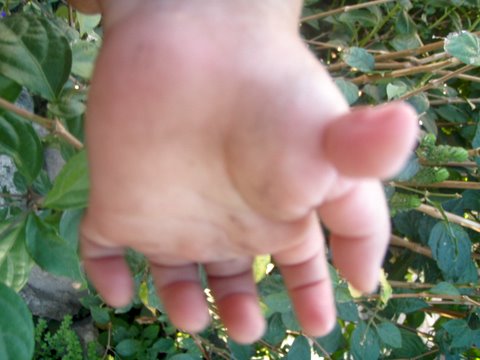
Lixa (7) and Wilmer (1 1/2 ) were born with a congenital physical anomaly called “pre-axial polydactyly.” This condition presents itself with an extra thumb. Both children were operated on in San Pedro Sula by an American Medical Brigade organized by The Ruth Paz Foundation. Lixa’s surgery was more complex because it contained bone in her extra digit. Wilmer’s was an easier surgery because it contained soft tissue.
We are thankful to the many American medical personel who donate their services in Honduras. And we are especially grateful to Mrs. Peggy Kipps (Exec. Director of the Ruth Paz Foundation) who is readily available in directing us to resources within country and introducing us to trustworthy physicians.
Eight years ago, my mom told me we were going to have a little girl from Honduras live at our house while she received treatment for her clubfeet. As a 15 year old, I was hesitant about the idea of a baby from some foreign country staying with us because selfishly I knew it would affect my life. Little did I know just how big an affect it would be.
My involvement with Honduras has grown significantly over the years and while I’ve put in time and energy, I’ve received so much more in return. Initially, I just played with the children who were living at our home to help ease the transition. I can’t imagine what goes through their heads when they have to come to a new country, live with strangers who speak a different language, and have a major surgery. Attempting to remove any of the scariness and making our home a fun place to live was definitely important to me.
As Stefany, Noel, and Astrid made return visits to the US and I started traveling to Honduras, I became much more connected with the children. It was then that it hit me how different the lives of these children who I had become so close to could have been. Stefany was born with feet looking like this:
Without surgery, she never would have been able to walk and would have been an outcast in her village her entire life. It always makes me smile when I see her able to run and be the little tomboy she truly is (she is not afraid to throw a punch).
Four years ago, Noel’s parents told me they would like me to be his Padrino (god father). I felt honored as Noel had become like another brother to me. While I definitely appreciated Mita and Muncho selecting me, Noel found a way to give me an even better gift when I was in Honduras in February. On my first full day in Honduras, I went to pick Noel up from his bilingual school. When I found him in a big auditorium, Noel wanted to walk me around. As we went by his classmates and friends, he would stop at each one, point at me, and tell them “this is MY padrino.” I can’t even describe how cool it felt that Noel cared so much about me that he wanted to show me off.
It hasn’t been just the children who have stayed at my house that has helped me develop a love for Honduras but also the people in Flores as well. Every time I am there, they could not be more helpful, protective, and caring. While these Hondurans comparatively have so little, they are always trying to do something to help me. This definitely provides a driving force for why I want to continue to help them. Whether its spreading the word, collecting donations, or applying for grants, knowing that they not only need help but sincerely appreciate it motivates me to find new ways to help.
For anyone who is interested in becoming involved, I definitely recommended it. There are so many different ways to help and I have no doubt you’ll find you get much more out it than you put in.
“Honduran time.” Anyone who has traveled to, or lives in Honduras, knows what I am talking about. This is something I embrace and struggle with every time I’m there. On the one hand, it can drive me crazy standing on the side of the road, waiting for a bus. There isn’t a real schedule, it “comes when it comes.” We may be headed into the city with a list of items we hope to accomplish. Inevitably, we won’t get it all done. It may be that the internet is down, the lawyer is out of legal paper, or someone is on strike. It can be terribly frustrating…
Thankfully, these feelings are contrasted by the pleasures of slowing down. I never experience the stress in my neck, and spend much more time “being” rather than “doing”. Often times the heat forces you to slow down and take more time for leisure. We certainly spend more time visiting with neighbors and friends…in the end, the pace is a “gift.”
It has been ten years since our journey to Honduras first began. During that time we have tried many things, made many mistakes and learned a great deal. One thing that stands out boldly is the resiliency of the Honduran people.
In this third world country, where the majority are living well below the poverty line; most lacking proper housing, medical care, educational opportunities and even clean water, they remain resilient.
Living life, facing daily struggles, is their norm. Many of our neighbors live day-to-day, meal-to-meal. Perhaps this is how they are able to “live in the moment”, not wasting their energy worrying about tomorrow or the “what if’s” of the past.
It seems to me that people living in poverty are faced with insurmountable challenges. We witness families having to decide whether to purchase medicine or food…they can’t afford both. We know people who work in deplorable conditions in order to earn a few meager dollars.
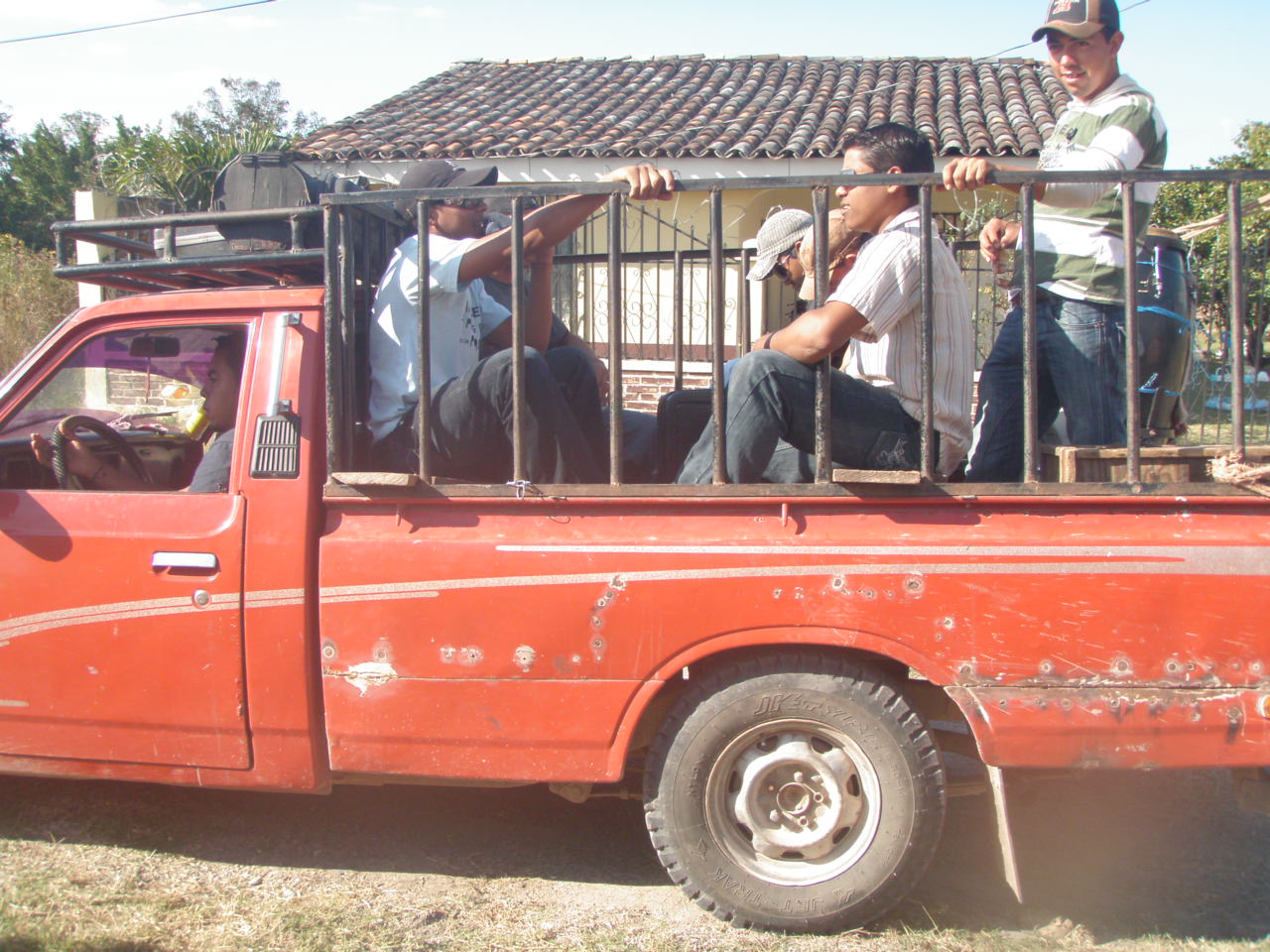
Accidents and early deaths are common. Whether it’s riding in a run down bus or car, prone to crash. Or living in a home without electricity where the occurrence of burns is high because of accidents with candles or open fires. We’ve known of children dying in pillas (used for washing), rivers, and being hit on the highway, crossing for school. This is life.
And yet, I never hear complaints…pleas for help perhaps, but no sense of entitlement. My dear friend, Ana said simply, “why wish for something you don’t have? I don’t miss it because I never had it.” So simple.
Facing daily adversities certainly makes the people strong…physically, emotionally, spiritually. We will continue to learn by our Honduran friends, and it will be humbling.
As I sit here on the beach at Hilton Head, S.C., I think of the people in Honduras. It doesn’t matter where I am, every day they are on my mind and in my heart. Today it strikes me because I’m on vacation and I think what a foreign concept that is for most Honduran people.
They struggle to find work, no matter what the conditions and how limited the pay. Others strive for the opportunity to attend school, if their families can afford their uniforms and can get by without them contributing income.
And here I sit, watching the ocean and thinking of my friends who are dealing with the hottest month of the year, wondering if they will have the opportunity to find a cool place to refresh.
Fortunately, guilt is not consuming me. Instead, through the years of working in Honduras, I have learned to appreciate everything! Not just affording a vacation, but every day simplicities such as a clean shower or the ability to open my medicine cabinet and find what’s needed. We are blessed
One of the most frequent questions I am asked while being a foster mom/temporary legal guardian is, “how do you let the children go? ” Many follow-up with, “it would be too hard for me” or “I would just want to keep them.”
In the past four days, I have sent one year old Berenice and six year old Astrid, home to their families, in Honduras. Berenice was here for only six weeks, but it was a very intense period of time because she underwent a heart catheterization and open heart surgery, spending more than a week in the pediatric intensive care unit at Tufts Medical Center. There were some very frightening moments during Bee’s stay in the hospital, and I often thought of her family far away, and how fortunate I was that they trusted me with her care.
Astrid was here for four months, and was hospitalized for two surgeries on her foot. Although the surgeries were less frightening for me, the months of having a young child in a full length (non weight bearing) cast were fairly demanding. During this time, Astrid did not complain once of the inconvenience or pain she endured. Not only could we witness the physical changes, we watched her master the English language and grow emotionally and academically.
Although “the girls” really became a part of our family, I have such a sense of peace in saying “farewell” to them. I really believe that I have done what I was “called to do”, and am now sending them back, to where they truly belong. It is also reassuring knowing that I will see them in June, and they will forever remain in our hearts.
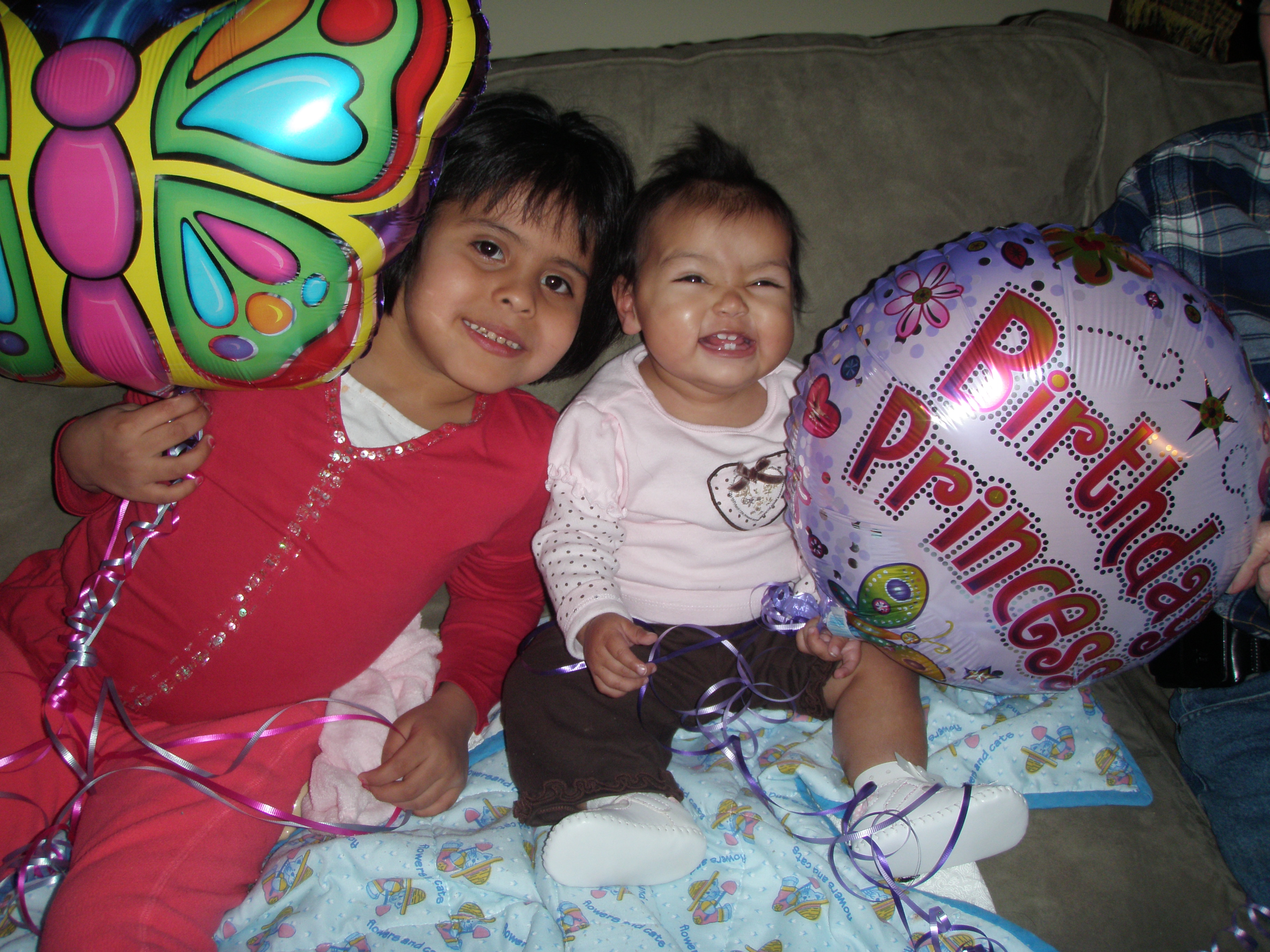
Berenice turned one year old on March 10. 2011. This was the day she was discharged from Tufts, following the heart catheterization. Astrid (6 years old) had baked and decorated her cake and was so excited for the party. However, Berenice was too tired and fell asleep early, so we postponed the party for the following day.
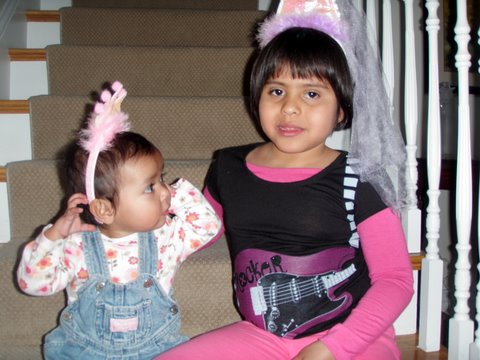
The girls were all dressed up in their party dresses, hats, blowers and balloons. Berenice enjoyed the songs and birthday cake. We felt privileged to be part of her celebration. Our thoughts were with her family in Honduras, and with Ray Tye’s family here in the Boston area. I believe it’s a miracle that Berenice was born on the day Ray passed away, and am sure there is a bond between them. May they both stay blessed.

 Esperanza - Hope For The Children