Previously in our “Success Stories” section we focused on the Honduran patients who have received treatment in the United States. However, that is really only a portion of the work Esperanza does. Whenever possible we try to find treatment for the patients within their home country, allowing them to stay with their family. To learn more about these children who have received treatment within Honduras, check out our Success Stories page. Over the next few weeks we will continue to add more to this section, so be sure keep an eye out!
A Courageous Fighter
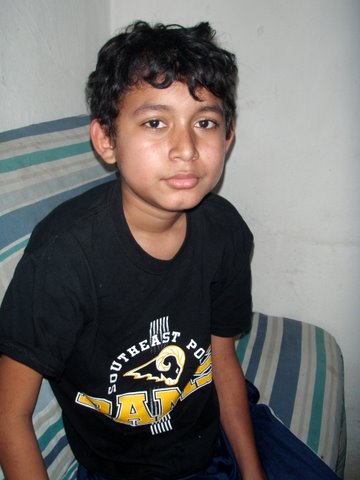
Gerardo Enrique Inestoza Ruiz just turned 15 years old on July 17th. Earlier this year, he was diagnosed with leukemia. Hearing a diagnosis of cancer is difficult enough to handle emotionally, but if you are unable to afford treatment, it can feel totally hopless. Gerardo’s family visited with our Honduran coordinator, Ana Hernandez. to see if we could help. We have been able to provide financial assistance which covers his medical, transportation and food costs. Gerardo is handling his chemotherapy as well as can be expected. The days of treatment are extremely challenging because Gerardo and his dad travel by bus to a city a few hours away. Returning home, tired and nauceous on a bus making frequent stops for passengers and road work, is draining. Each day Gerardo faces many obstacles…trying to stay strong by eating soft foods his stomach can tolerate and wearing a mask to avoid infections. He is a bright student who is sad to not be in school. The family humbly asked if we could buy a mattress for Gerardo because his is full of holes and is so uncomfortable. Such a modest request and we’re grateful we can do something to ease his pain. We look forward to seeing Gerardo in three months and will continue to monitor his treatment from afar. Please hold him in your thoughts…
Living with Congenital Heart Disease

As I write this entry, Noel is having an echocardioram (ultrasound). We have returned to Tufts Medical Center for his yearly check up since he had open heart surgery in June 2007. He has already been weighed, measured, and had an electrocardiogram. It is a rather lengthy visit where the doctors do a thorough evaluation of his heart.
It’s a reminder to Noel that it is the reason he receives a medical visa for the U.S., and that he’s not just here for summer vacation! For me, it is a time for reflextion…remembering that Noel has a serious health condition which lasts a lifetime. And my thoughts are also consumed with memories of Mr. Ray Tye and his generosity in offering Noel the “gift of life.” Both Noel and I talk about him often and believe he is still keeping watch over him.
We wish to thank the Ray Tye Medical Aid Foundation for their continued interest and support of Noel. We look forward to visiting Mrs. Tye and Ms. Teri Carlson later in the summer.
Transitioning back to life in the States
It has been less than two weeks since I returned from Honduras, and my mind continues to be in overload as I reflect on all my experiences. I always have a difficult time transitioning and this is certainly the case, even after a one week visit.
Ofcourse I am thrilled to have arrived safely home and to be surrounded by family and friends, but my heart is once again torn in two as I leave my friends, past and current patients, and new aquaintances.
My week was actioned packed and filled with tears of joy and sadness. The first day I visited with “Baby Bee” and met her family for the first time. They are an incredibly loving and thankful family and welcomed me with gifts and a new nickname, “Mamasita Emily.”
We held a birthday party for former patient, Stefany who turned nine years old. She was one of Esperanza’s first patients and arrived at our home as a 17 month old, seeking treatment for bilateral clubfeet. Watching her run on the “slip n’ slide”, jump in the pool and swing at the pinata was so very gratifying.
I had the opportunity to attend Astrid’s kindergarten graduation ceremony. Despite the fact she missed four months of school while receiving medical treatment, she still graduated third in her class. Oh, how proud she was to receive her medal!
I visited with ongoing patients and new ones to Esperanza including: 13 month old Adriana (awaiting a heart catheterization), and two people with leukemia, 14 year old. Gerardo, and 39 year old, Maricela. It is heartbreaking enough that they are facing these serious health issues, but not having the financial resources for treatment is so unjust.
Fortunately, my spirits were lifted visiting “our” patients who have been successfully treated including 13 year old, Iris, who has cerebral palsy. In the past, she was hunched over, not wanting to bear weight. After operations and physical therapy, she is happily playing and attending school with big dreams of the future. I also had the chance to see soon-to-be eight year old, Martha Cristina. She is absolutely a miracle…diagnosed with kidney cancer 3 1/2 years ago, she is now in remission after extensive chemo and radiation therapy. She is a bright eyed, beautiful girl who is full of spirit.
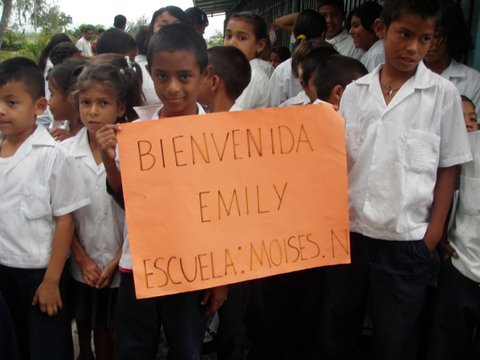
One of the highlights of my week was attending a dedication service at one of the public schools in Flores. Our church (Pilgrim Congregational, UCC of Lexington, MA) had raised funds for a building project. Although it was a Saturday, the students (in uniform) and their teachers gathered at the school to welcome me with songs (including the national anthem). I had the honor of placing the first brick into a space that will become their outside eating/gathering area. This is an incredibly impoverished school, offering me a reception of gratitude….another tearful moment.
Ana and I met with representatives from Plan USA. They are a group assisting us in the process of bringing clean water to Flores. This has been an incredibly slow process (several years)…our latest hurdle is getting the new lawyer for SERNA to turn over the ownership for the project to the town of Flores. Next, a technical study will be completed. We are getting closer to our dream of bringing clean water to Flores…it will be one of the best ways to prevent many illnesses.
I returned to the states with 9 year old, Noel. He is a patient of Esperanza’s who had successful heart surgery five years ago. Noel will be spending the summer with us.
Tom and I look forward to returning in the middle of October for a month long visit.
Update on Berenice
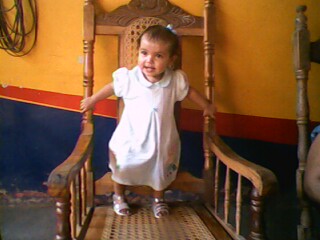
Berenice will be 15 months old on June 10th. She returned to Honduras nearly two months ago (following open heart surgery), and is growing well both physically and developmentally. Berenice is now walking and so much more active with her improved heart. After returning home, she was hospitalized with dengue fever, but thankfully has recovered. Looking forward to seeing “Baby Bee” in 7 days!
Thank you Pilgrim Congregational Church, UCC!
For the past ten years we have been receiving financial and spiritual support from the folks at Pilgrim Church in Lexington. The memebers and friends of the church have also generously offered their support with supplies of clothing, shoes, school supplies and more.
Every spring, the Honduran Support Group holds a book sale. Proceeds from the sale are used to purchase Spanish books and supplies and/or complete a project at one of the schools in Flores, Honduras. This year, over $1,500 has been donated to construct an outdoor eating and play area at an elementary school.
We wish to thank Mrs. Sandi Gardiner who organizes a fantastic crew to coordinate the book sale, and to Pilgrim’s Mission Committtee for supplementing the proceeds. This project is being enthusiastically endorsed by the teachers in Flores and will be enjoyed by many children.
We Couldn’t Do It Alone
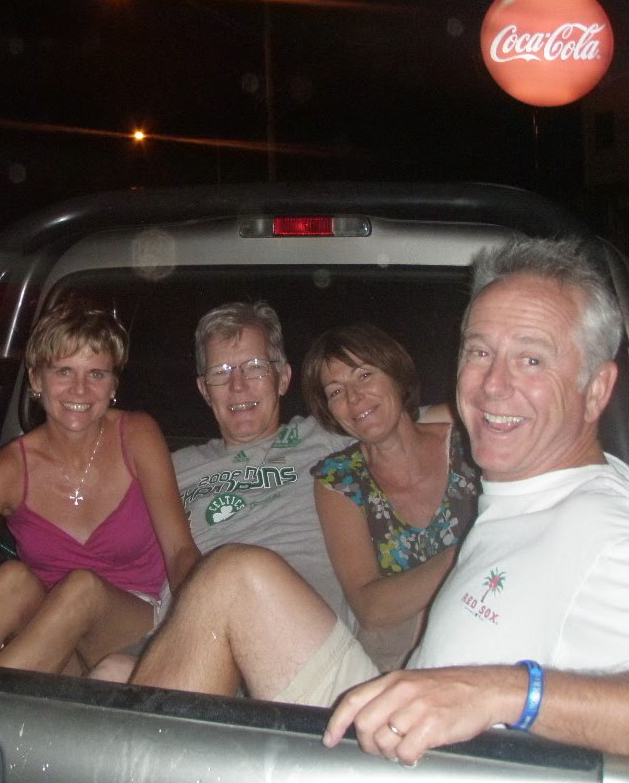
It was on our 2nd trip to Honduras, riding in the back of a pick-up truck when my husband and I looked at each other and knew, “this is what we’re suppose to do.” We feel very fortunate to have found our shared passion, and to have the ability to live our dreams…but we wouldn’t be able to do this without the support of others.
First, and most importantly, is our immediate family. I remember telling “the boys” that we would be hosting our first patients, a 17 month old girl and a 19 year old young woman. Their first reactions were of reluctance. They knew we wanted to help others, but now it was going to impact their lives. I can honestly say that it was the most positive way we influenced their childhoods.They certainly formed bonds with the children and some became as close as siblings, and they were taught life lessons from them, as well. Our boys shared these experiences with their friends, and they too became actively involved.

My extended family has shared their love and support with our Honduran children. Often times “Abuela” and “Abuelo” (a.k.a. Grandma and Grandpa) have stepped in to babysit and drive to/from the airport and hospitals. My brothers have been actively involved with the children and also shared their expertise in law and finance. Esperanza wouldn’t have been formed without their help.
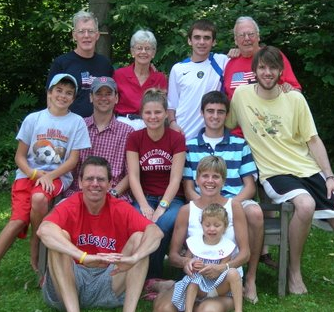
Certainly our friends have made all the difference in the world. They have provided much needed respite…at the exact times we felt pushed to our limits. Friends have welcomed “our” children into their homes, and fully immersed themselves into their lives. I’m thankful to have friends with a common vision, and we have so much fun sharing our memories of the children.

I absolutely agree with the statement “it takes a village to raise a child”…thanks to all who share our journey.
So Many Things To Love About Honduras
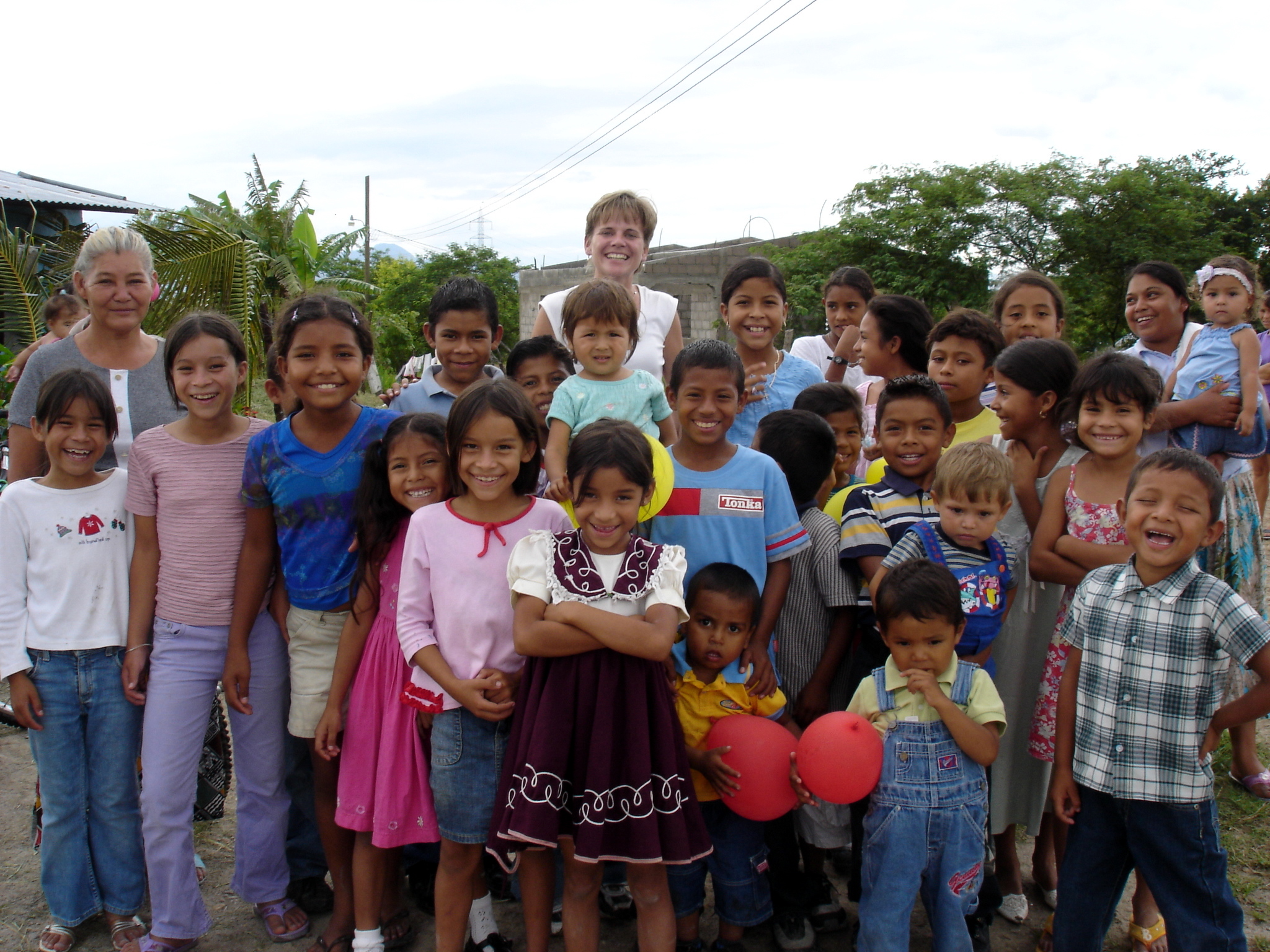
When I think about living in Honduras, one of the first things to come to mind is simplicity. Our home is small, on a tiny plot of land and the house is so uncluttered…no t.v., dishwasher, washing machine etc. We live amongst the geckos, roosters and a roaming bull.
Our home is generally filled with children. I love to watch them play…they still rely on their imaginations to make up games…something many other children have lost. When they don’t have certain equipment for sports, they make up their own. Flip-flops are used for goalie gloves and sticks are used for baseball bats.
And it’s not just the children who show their creativity…I have seen adults use Coke bottles for three different things. One was used at a public hospital to collect used needles. A smaller version was used by an elderly asthmatic patient for an inhaler. Our friend Mita cut her’s lengthwise, and uses them for flower boxes.
Simple life….their homes, their lives, their wants, their needs.
Living In Two Worlds
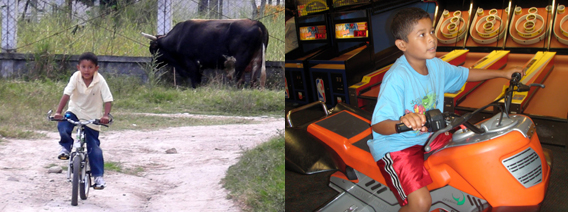
How do they adapt to living in two different cultures? We have hosted a baby as young as 11 months, many school aged children, a 19 year old young woman and a middle aged man, while they have received medical treatment. They have stayed for as little as six weeks and as long as six months. We often wonder how they acclimate to life in the U.S., and how they re-adjust to life back home in Honduras.
Recently we hosted 11 month old Berenice. She arrived to us with a serious heart defect. I cannot begin to imagine what her parents went through emotionally, handing her off to a nurse who would transport her to us…a family they had never met, living in a foreign country. People often question, “how could they let their child go?” My response is, “this is there only hope for keeping their child alive.”
Berenice arrived to us having been solely breast fed. Those first few days were quite challenging, offering her every type of formula and milk in all types of bottles and sippy cups. At last we discovered juice in a glass was what she’d tolerate…she loved the way her new teeth clanked on the glass! Soon we began introducing every type of food…so much for one new item at a time, this was full immersion.
Not only was food a new thing to become accostomed to, so was sleep. No longer was she snuggled in bed with others or perhaps sleeping in a hammock. She was now offered her own crib, in a room by herself. It became my husband’s nightly routine to sing her to sleep with a Willie Nelson tune.
Along with food and sleep, we all looked different, spoke in a different language and lived in a much different climate. It was amazing to see how quickly Berenice acclimated. Soon she was calling me “Mama” and learning to wave “bye bye” and play “peek-a-boo!”
The other children have adapted equally as easily. I am astounded how quickly they try new foods, master electronics, and even learn that it’s safe to flush toilet paper! It is a rare occassion that they become tearful and express missing their families back home. I often reflect to being a six year old girl, attending a week long day camp, in the next town over, and being extremely homesick!
Pleasantly, eveyone who has stayed with us wants to go home. They miss their families, friends and culture. It certainly has made our “farewells” easier, knowing they are returning to someone and something they love.
The Inequities
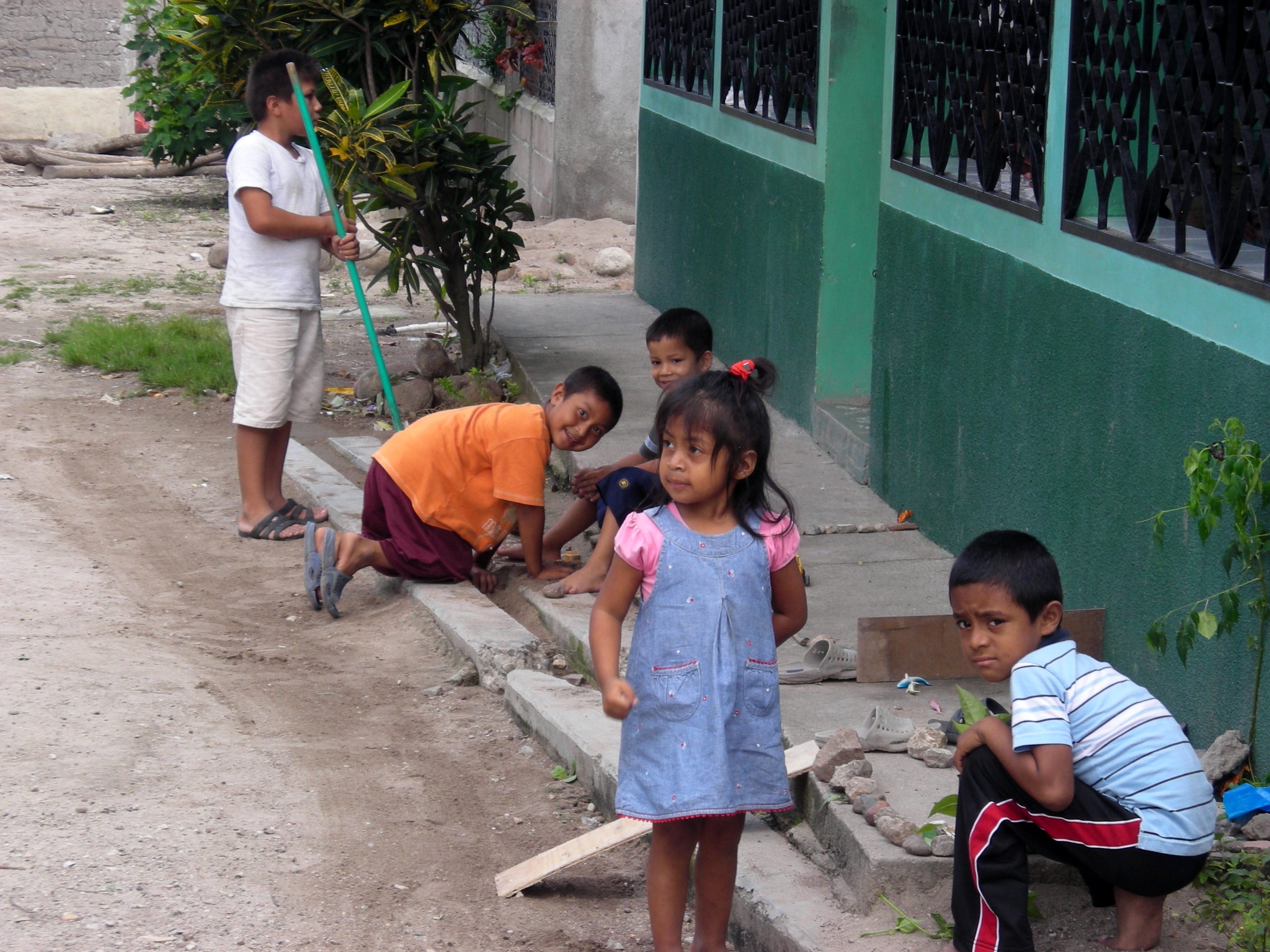
I grew up blissfully believing that “life was fair.” I have many memories of my grandmother giving my brothers and me equal amounts of gifts, wanting everyone to have the same. It wasn’t until I was an adult, and more notably, after visiting Honduras that I really became aware of the inequities of life.
After visiting Honduras, I realized how blessed I was to be born in the United States. I don’t always feel proud, but I certainly feel blessed.
Others often question why we volunteer in Honduras, saying there’s so much need in the U.S. We certainly don’t discredit this and don’t believe it should be an either/or choice of involvement. But, there is a huge disparity. Honduras doesn’t have the “safety net” that the U.S. offers. They do no not have a medicaid system, homeless shelters or food pantries which we have. When you are admitted to a public hospital, you are responsible for everything from your own medications and blood to toilet paper. If you are accompanying a patient, don’t think you’ll be sleeping on a pull-out chair, you may have the chance to sleep on the blood stained floor.
Attending schools in Honduras is often a priviledge, not an expectation. In the U.S. we deal with truancy, in Honduras, they are grappling for the opportunity
 Esperanza - Hope For The Children
